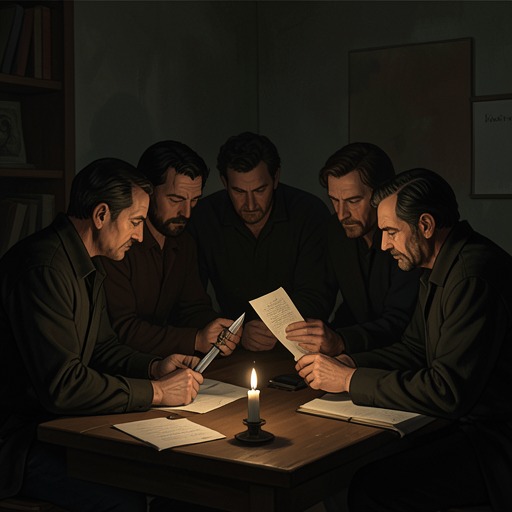
Richard Earl of Cambridge
Henry VRichard Earl of Cambridge is an earl implicated in a conspiracy against King Henry V. His brief but consequential role moves from membership in a group of three corrupted men to direct exposure and sentencing, turning the king’s departure preparations into a reckoning with treachery within his own company.
Identity and the Conspiracy
Cambridge is named alongside Henry Lord Scroop of Masham and Sir Thomas Grey as one of three men corrupted by treacherous crowns. The surrounding image of hollow bosoms filled with betrayal frames their allegiance as compromised, though the evidence here does not specify Cambridge’s personal motive or the terms of his involvement.
The charge later made against him identifies the conspiracy as an attack on the king’s person and connects the plotters with a proclaimed enemy and that enemy’s coffers. Cambridge is therefore presented not simply as disloyal, but as implicated in a threat that joins domestic betrayal to an external power.
Exposure as the King Prepares to Embark
As the wind favors departure, King Henry V addresses Cambridge, Henry Lord Scroop of Masham, and Sir Thomas Grey by their ranks and asks for their thoughts about the force being taken along. The courteous form of address places Cambridge within the king’s immediate company at the very moment the concealed conspiracy is brought into view.
The encounter then turns sharply. King Henry V identifies Cambridge by name and tells him that the sentence is his, before declaring the charge against the conspirators. The movement from a question about the expedition to a direct judgment makes the departure scene an exposure: Cambridge is not allowed to remain merely one name in a reported plot.
Sentence and Dramatic Significance
Cambridge’s part in the scene ends with judgment. The evidence establishes that the king announces his sentence, but does not establish here what punishment is carried out afterward. Cambridge also asks the sovereign for pardon in a brief plea that distinguishes his fault from his body; the wording leaves the precise scope of that appeal compressed, while confirming his recognition of the king’s authority at the point of judgment.
His limited stage presence gives the conspiracy a concrete human face. Cambridge is first counted among three corrupted men, then addressed individually by the king, and finally subjected to sentence. That progression makes concealed treason legible as a direct challenge to royal power, while the abruptness of the exposure contrasts the language of courteous address with the severity of the accusation.